
“Do you think I’m a good actor, Ari?”
In HBO’s Entourage, struggling hunk Vincent Chase begs his agent for reaffirmation. “I didn’t sign you because I thought you could act,” replies Ari wryly, “I signed you because you were a movie star.”

Tom Hardy is a rare breed of movie star: one that can act. A fresh-faced Noughties Hardy can be spotted in everything from Band of Brothers to Star Trek: Nemesis. The thespian met widespread fame playing a trio of thugs: Britain’s most dangerous prisoner (Bronson, 2009), a beastly MMA fighter (Warrior, 2011) and the disfigured terrorist Bane (The Dark Knight Rises, 2012). This villainous performance was inspired. Yet it failed to overshadow his seminal predecessor – Heath Ledger’s Joker. Nevertheless, DKR grossed over a billion dollars and made Hardy the world’s hottest actor. Hollywood studios clamoured with their eight-figure advances. Hardy wisely avoided these popcorn flicks – with the notable exception of the awesome Mad Mad: Fury Road. Instead he focused on smaller projects and more challenging roles. Take Locke for instance. Who would have thought phone calls about concrete could be so thrilling?

Hardy’s latest effort is sadly much more predictable. Legend is a straightforward yarn about the Kray twins, notorious London criminals in the Swinging Sixties.(Legend is also a 1985 fantasy film starring Tom Cruise and unicorns. Which shows just how little this title tells you about the movie.) In a double act, Hardy plays both the debonair Reggie and paranoid schizophrenic Ronnie. (I imagine Xzibit at the pitch meeting: “Yo, I hear you like Tom Hardy. So I cast Tom Hardy opposite Tom Hardy so you can watch Tom Hardy while you’re watching Tom Hardy.) His Reggie is charming yet vicious. In contrast, Ronnie is awkward and unnerving. Many other critics have slammed the Ronnie performance as broad and comedic. I actually liked it. Schizophrenia isn’t all hallucinations and acting crazy. It’s characterised by the absence of normal features. I was convinced by Ronnie’s disconcerting stare and lack of social graces. Even if we never truly get inside his mind.

The film itself is seriously flawed. There is no Rise To Power tale. In the opening scene, the brothers are already established as fearless gang leaders. Well, does it at least revolve around gang warfare? The Krays do indeed have enemies – the South Bank’s “Torture Gang”. Their tantalising introduction involves a horsehair wig, meat hooks and a car battery. Sounds great, right? But within ten minutes their leader is unceremoniously arrested and disappears. A total waste.
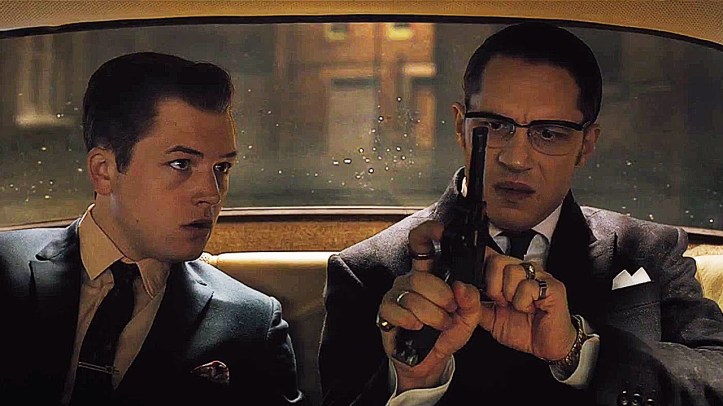
Is this at least a Cops and Robbers thriller? Our big bad Bow Street Runner is played by Christopher Eccleston, best known as Doctor Who’s cult favourite Ninth Doctor. But the character actor is, ahem, criminally underused. He is introduced within minutes, but is largely forgotten for much of the bloated running time. Barely half an hour to go, he performs a well-worn cliché: sticking the brothers’ photos on a board and announcing “They’re our target.” But there’s no tension, no build-up during the whole second act. Why couldn’t this scene appear an hour earlier?

Writer-director Brian Helgeland unwisely centres on romance over crime. Reggie’s burgeoning relationship with Frances becomes the focal point. It’s a cynical decision used to boost the film’s box office draw among women. But the Eastenders’ relationship is like a bad Sunday roast: overcooked and flavourless.
Frances (Emily Browning) is the film’s weak link. She is like a meringue: tasty, but lacking any real substance. She is a simpering cliché. Her life revolves around Reggie: whenever she talks, it’s either to him or about him. Her later Madame Bovary impression is unconvincing. Feminists take note – she fails the Bechdel Test. Frances begs Reggie to abandon his life of crime, to “go straight”. “You think it’s really that easy?” he counters. Another cliché. We’re not exactly breaking new cinematic ground, are we? There’s nothing here that The Godfather Part II didn’t do better four decades ago.
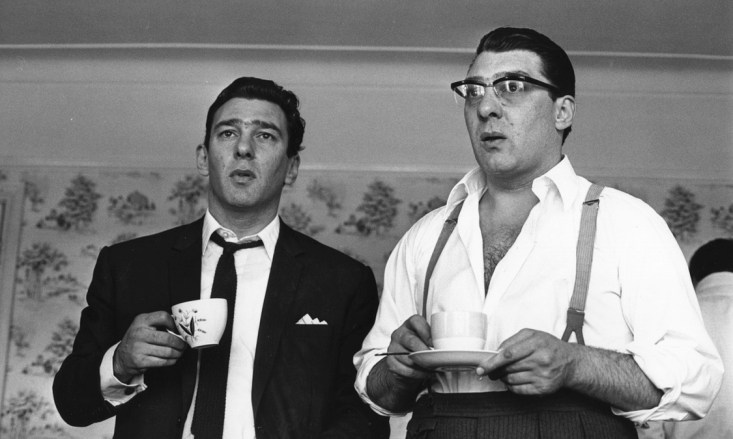
The Kray Twins
Legend cribs heavily from other, better gangster movies. Most pointedly, Goodfellas: it riffs on everything from the iconic nightclub tracking shot to the voiceover. Yet from the get-go, Goodfellas’ voiceover puts us firmly in the shoes of Henry Hill. It makes us feel like a part of the living, breathing Mafia. We become an insider, a wiseguy. And later it shows a feminine perspective on the glamorous yet brutal mob lifestyle.

Legend is everything a voiceover shouldn’t be: expository and superfluous. It breaks the Golden Rule of cinema: Show, Don’t Tell. And for some inexplicable reason, Frances is chosen as narrator. I presumed this story was based on her memoirs. But it’s adapted from an altogether different biography, by John Pearson. Frances flatly recounts details about arrests and shady deals. This omniscience makes no sense. Reggie shelters her from this side of his life. How could she have intimate knowledge of gangland affairs? Does she work as a police secretary in her spare time?
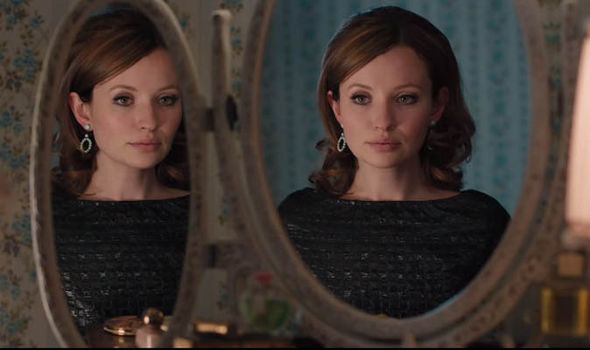
Helgeland evidently doesn’t care. And Frances’ personal life is narrated with the subtlety of an anvil. We don’t gain any insight into her mental “fragility”. After a dull, ponderous two hours; she’s just as much of an enigma as ever. Legend’s dialogue is often cringey, and for good reason. Helgeland holds the dubious distinction of winning an Oscar and a Razzie in the same year. In 1998, he won Best Adapted Screenplay for the stellar L.A. Confidential and Worst Screenplay for The Postman, a maudlin Kevin Costner vehicle.

Brian Helgeland didn’t squander his $25 million budget. The sets certainly look like London in the Sixties. But it doesn’t capture the giddy thrills and the reckless hedonism. Helgeland’s career will splutter and stall over the coming years. Emily Browning’s roles will fade with her looks. But Tom Hardy will go from strength to strength. He makes Legend watchable. Nothing more. One day he will collect his well-deserved Oscar with an Academy-friendly role: perhaps as a paraplegic jockey or a gay veteran. By that time, few cinemagoers will remember the time they saw two Tom Hardys for the price of one.


 Corzies
Leave a comment