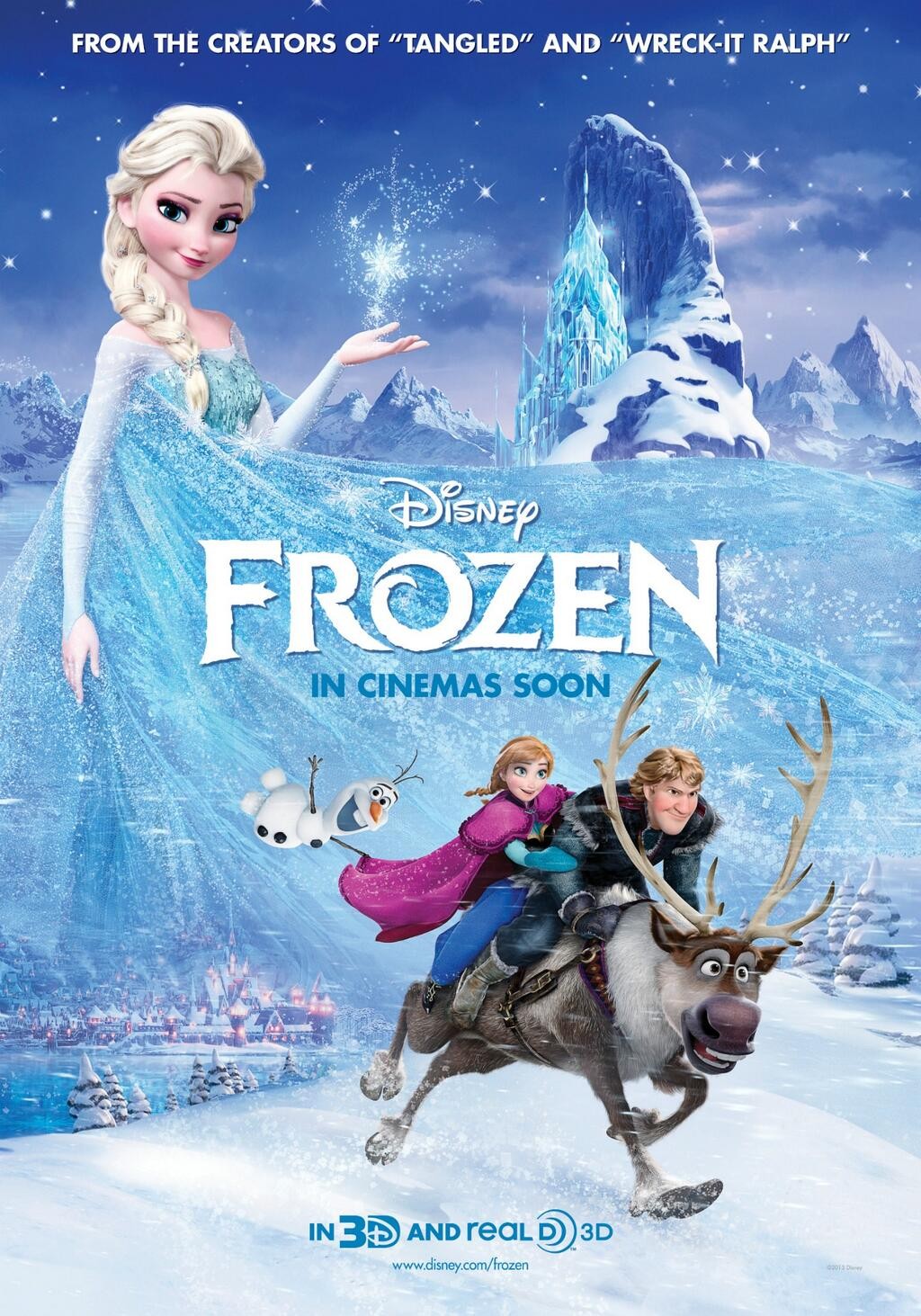
Yes, I know Frozen came out way back in November 2013. Let it go.
I deliberately put off seeing the film for three months. After the release of Kung Fu Panda 2, I convinced myself that I was finally “too old for kids’ movies”. All their exaggerated expressions, slapstick comedy and frenetic action sequences were geared towards five-year-olds, not adults. And so I watched Yuletide blockbusters and Oscar contenders come and go from cinemas. Swayed by my own sister, I finally caved. “Two tickets to Frozen, please.” Five words I will never regret.
Frozen is a modern fantasy classic. The faux-Medieval setting is played fast and loose: the kingdom features sandwiches, chocolate, and talking snowmen. The story focuses on Arandelle’s two princesses, Elsa and Anna. The dual protagonist structure is a fresh new take on the creaky old Hero’s Journey. Dual female protagonists are as rare as hen’s teeth: Thelma and Louise is the only other Hollywood example I can think of. But contrary to conventional wisdom, passing the Bechdel test didn’t exactly hurt Frozen’s box office. At $1.3 billion worldwide, it stands as the highest grossing animated film of all time. And with good reason.
Let’s take a quick detour to the Harry Potter series. From a narrative perspective, it sucks. Harry is far too passive. The plot of each novel is set in motion by a more interesting character – Harry simply reacts. You’re a wizard, Harry. You must not go to Hogwarts. You’re the prime target of a deranged escapee. You were entered into the Tri-Wizard Tournament. All these events just happen to Harry. In contrast, let’s look at Frozen’s better, active protagonist: Anna.

Anna herself sets the plot in motion. She coaxes young Elsa to experiment with her powers. Later she riles up Elsa into revealing these same powers. Then she leaves, of her own volition, to save the kingdom. Like any good hero, Anna is the cause – and solution to – her world’s problem. Anna is bubbly and likeable (For the First Time In Forever), yet never grating. She’s also flawed and relatable. Do You Want To Build A Snowman illustrates her loneliness and isolation in the absence of her older sister (and closest friend). Her whirlwind romance with Hans (Love is an Open Door) reinforces her desire for attention and love. And her quest to find her sister shows her selfless naivety.

Elsa has her own journey – one of self-discovery. A pair of childhood traumas have consumed her with guilt and fear. Fear of emotional engagement. Fear of hurting her loved ones. Fear of her own potential. It’s easier for Elsa to close herself off from the world. To than repress her fears, rather than facing them. When her powers are revealed, she flees out of fear of persecution. And who can forget Elsa’s show-stopping, Oscar-winning song. Let It Go is the first time the ice queen embraces her powers. She revels in her utter freedom: “No right, no wrong, no rules for me – I’m free”. This echoes Nietzche’s idealistic vision of the “Ubermensch”, a person worthy to transcend conventional morality. But Elsa soon learns that you can never escape the past…
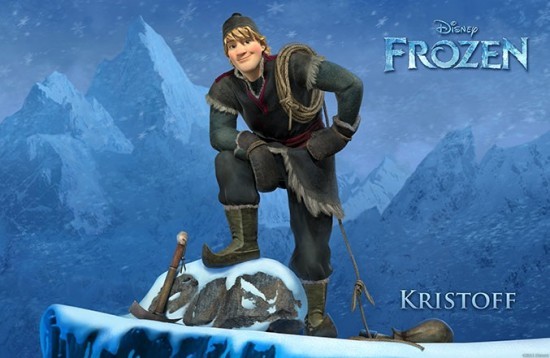
Kristoff too prefers his own company. The strapping young blond is a true misanthrope. His only companion is his trusty reindeer Sven. He claims “people will beat you and curse you and cheat you!” It’s a self-defeating attitude, at odds with Anna’s sunny, optimistic world-view. But Sven and the hilarious trolls bring out a funny, self-deprecating side in Sven. And his burgeoning relationship with Anna shows his personal growth. He bravely risks life and limb for her. And at the end of Act Two he selflessly lets her go, to the arms of her fiancé and “true love”.

Now this all sounds a little heavy – particularly for a feel-good children’s movie. That’s where Olaf the Talking Snowman comes in. In addition to warm hugs, Olaf provides much-needed comic relief to Acts Two and Three. A mixture of physical comedy, witlessness and the airy tune In Summer endeared me to Olaf. He’s my favourite animated sidekick since Donkey and Puss in Boots. Josh Gad creates a fresh new character: he’s not simply a hyperactive Eddie Murphy or Antonio Banderas self-parody. Olaf is funny and memorable in his own right.
*****MAJ OR SPOILERS AHEAD*****
Seriously, do not read on if you haven’t seen Frozen. This gives away the entire ending.

And finally, our villain. We’re used to exaggeratedly evil antagonists in our Disney classics. Think of the Queen Grimhilde, the witch in Snow White. Think Cruela de Vil. Think Scar. Each reveals his or her nefarious intentions in Act One. In Frozen, we’re led to believe that the ridiculous yet malicious Duke of Weselton is our villain. I for one was was completely blind-sided by the film’s late twist – yet in hindsight it all makes perfect sense. Thirteeth in line, Hans has a miniscule chance of ever reigning in home kingdom. He calls to mind the Machiavellian bastard Edmund in King Lear: “Let me if not by birth, have lands by wit. / All with me’s meet that I can fashion fit.” Of course he preyed on Anna’s loneliness. Of course he manipulated Elsa’s fear of appearing a “monster”. And of course he abused his sovereign power in a time of crisis.
Frozen’s unforgettable climax is Hans’ attempt on Elsa’s life. It forces Anna to unambiguously choose between her own life and her sister’s. Anna makes the impossible choice and pays the ultimate price. There were literally tears in my eyes when I watched this scene. Stricken with grief, Elsa finally has her catharsis. Tears of love and sadness, an uncontrollable outpouring of emotion in the heartbroken ice queen.
Anna’s miraculous return to life is a fitting end to the tale. The message rings through in the film and in our lives. The truth that platonic love is every ounce as strong as romantic love. The fact that repressing emotions is never healthy. The message that it’s not enough to simply have loved ones: you must also express that love in each word and action.


 Corzies
Leave a comment