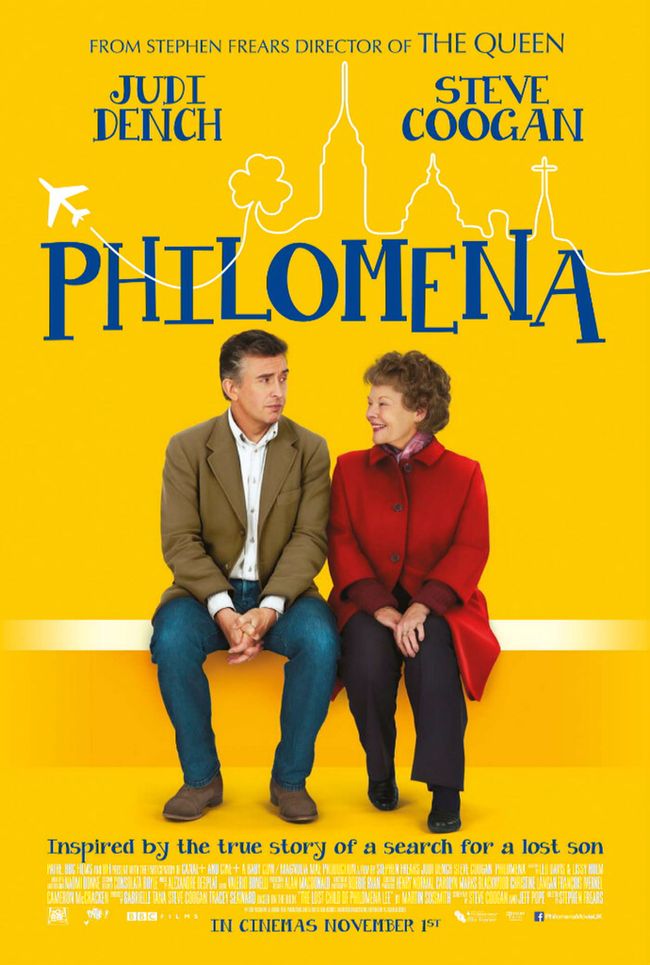
Conventional wisdom dictates that you need two things to make a box office smash: A Hollywood star – and a simplistic, action-heavy plot. Look no further than The Wolverine (Hugh Jackman, ninjas). Or Elysium (Matt Damon, futuristic gunfights). Or The Lone Ranger (Johnny Depp’s bird-hat, railway explosions). Yet a little film called Philomena was a bigger hit in Ireland than all those blockbusters combined.
Yes, I know Philomena came out the same week Tesco started selling pumpkins. But I only got around to seeing it this weekend. It’s a testament to the film’s popularity that it’s still in cinemas after three months. Its contemporary challenger Ender’s Game disappeared faster than you can say Molecular Distribution Device. (Provided it takes you over two weeks to say that.)
Anyway. Philomena: Judi Dench plays a Magdalene survivor trying to find her long-lost son. Steve Coogan is the journalist who covers the (true) story. Now normally there’s two ways this type of film goes: either Dench bursts into tears every five minutes as the filmmakers heavy-handed show how decadence of the Church . Or else Coogan plays every scene for the laugh and turns the whole film into a total farce. Thankfully, Philomena avoids both pitfalls. Director Stephen Frears (The Queen) deftly balances drama and comedy in the emotional tightrope of this road trip “dramedy”.
Coogan reins in his Alan Partridge persona, delivering a measured performance as an acerbic, resentful former spin doctor. But all eyes are on Dench, who’s cast against type as a doting “little old lady” – a far cry from MI5’s ice queen. She gives comedy (in spades) with her simpleness and utter lack of self-awareness. In fact, Philomena made me laugh out loud more than any other film this year. Dench’s performance is flawless: you believe she could be your own Granny. And her good nature is the perfect counter-point to Coogan’s bitterness.
Coogan channels our anger to the heinous injustice of the Magdalene Laundries. They took advantage of the societal shame and the internal guilt of unwed single mothers. These so-called “fallen women” were incarcerated for years. And these prisons are not ancient history: the functioned right up till the 1980s. The women were used as slave labour, seven days a week. They had their children taken from them. In my opinion, it is arguably our State’s most shameful act: an act for which it has only recently apologised. (Finally, it is paralleled to a different nation’s mistreatment of a certain minority for their “promiscuous” behaviour.)
Dench explores the human side of the travesty. She recalls how many of the nuns were kind and selfless: shining beacons in the otherwise merciless Magdalene waters. Early flashbacks reveal her own “grave sin”. The falling of a tasted (candied) apple symbolises her own fall from grace. She displays unshakeable faith in God, in spite of her inhumane treatment at the hands of the Church. Her positive demeanour is charming. But when her mask falls, we see half a century of anguish in the lines of her face. Philomena is a survivor in every sense.
Coolio. I have a test of Friday but I’ll try to get two more reviews out before the end of the week. Peace!


 Corzies
Leave a comment