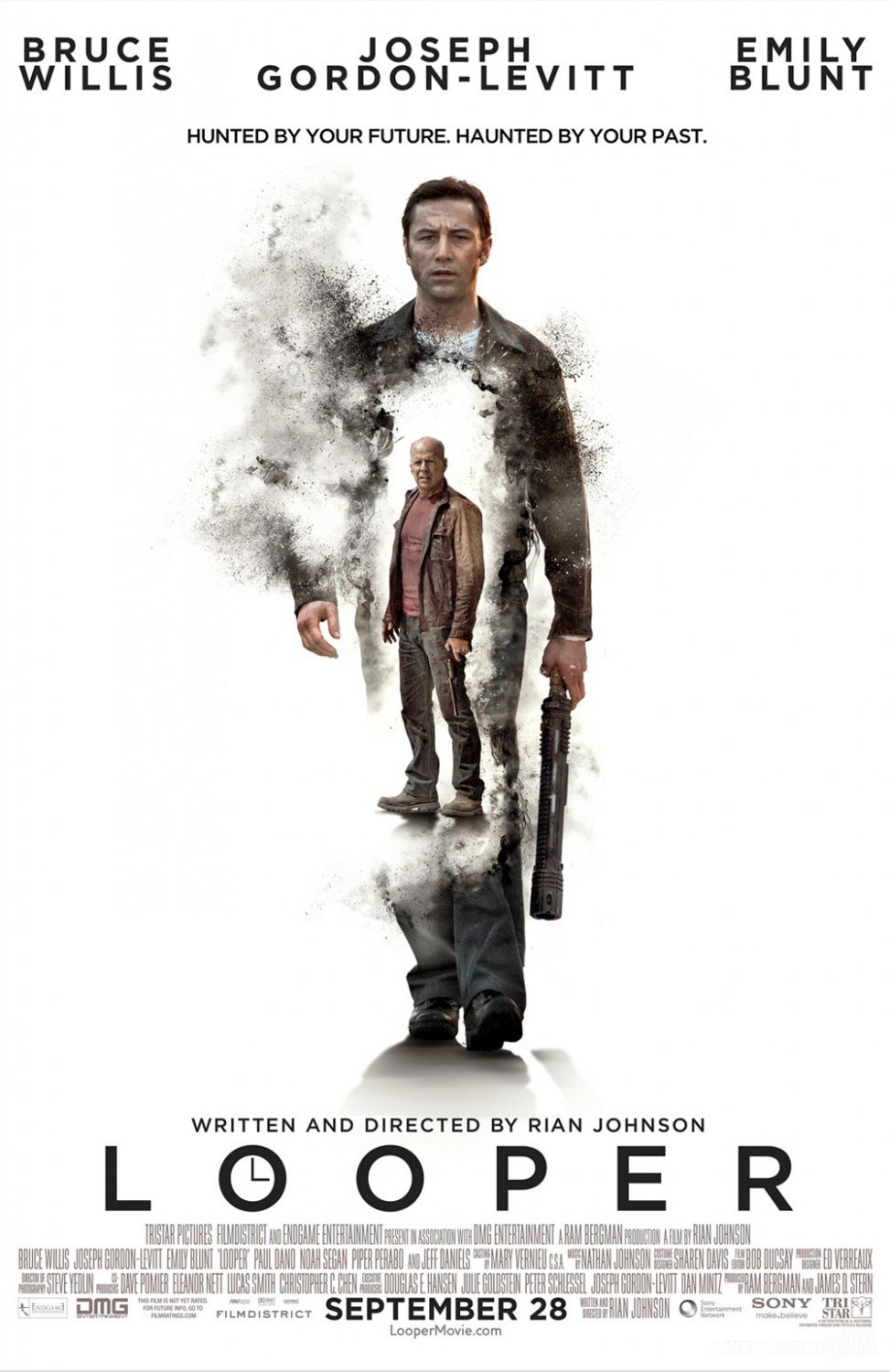
Looper is set in a futuristic world where time-travel is illegal, telekinesis is commonplace and Joseph Gordon-Levitt is Bruce Willis.
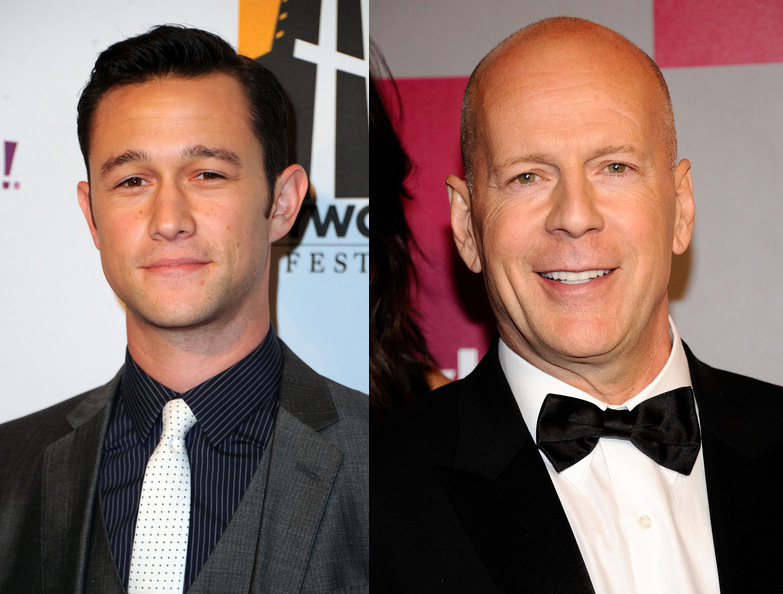
Nope, I still don’t see it. Even with well-rehearsed mannerisms, even with three hours’ worth of make-up, JGL bears only a faint resemblance to the venerable action hero. But it you can suspend your disbelief for just two hours, you’re in for a real treat.
But you wouldn’t know that from the trailer. The marketing team lazily spliced the film’s snazziest special effects – its “money shots” – into a bland, uninspired offering. No context, no atmosphere. Add in JGL and it seemed like brainless Inception knock-off. Yet Looper somehow managed to be the summer’s sleeper hit: it was immensely profitable, grossing over five times its budget. Unlike its trailer, Looper is damn good.
Director Rian Johnson gave JGL his big screen break in Brick – a subversive neo-noir starring a high school sleuth. Although the writing was a little too clever own good, the flick had strong visual flair that belied its half-million budget. With Looper, Johnson now $30 million to play around – a modest budget by Hollywood standards. But the film’s effects are as stunning as any blockbuster.
Looper demonstrated a credible futuristic setting. Wealth disparity has continued to grow. Shanty town sprawl across Kansas City town. Most who can afford cars drive old rust buckets, jerry-rigged with solar panels. Meanwhile crass Yuppies cruise by in their vintage cars and on hover bikes. Joe is one of those yuppies. He’s selfish. He’s hedonistic. He’s a contract killer. But his flaws make him interesting and give him ample room to develop as a character.
Joe gets on the wrong side of the wrong people. He is reluctantly taken in by Sara, a farmer and single mother, played by Emily Blunt (sans British accent). A romantic subplot is almost a prerequisite in Hollywood film. They are usually shoe-horned in, either for eye candy (Transformers) or to draw a female audience (Man of Steel). They may have no impact on the over-arching plot and could easily be cut out (Flight). That’s why it is so refreshing to see a film like Looper. Not since 1986’s Witness has a romantic subplot been so integral to a movie’s plotline. Sara and Joe’s relationship develops slowly. It feels organic. It feels real. It is Sara who pushes Joe to grow. He learns to love. To truly care about others. To put them before himself. But Sara doesn’t just function for his benefit. She has her own priorities, her own dreams, her own fears. And she is right to be afraid – she is in very real danger. Joe is the only thing that stands between her and a bullet. Or something much worse.
I’ll stop it there before I give too much away. Looper has entertaining action scenes like any blockbuster. Yet it also had a profound impact on me. It changed the way I see my relationship with others. I had deep empathy for Joe and I grew with him. I understood Sara’s struggles and her conflicting desires. And I was truly moved by its powerful, perfectly-fitting finale. Its visceral thrills and inventive action sequences are now but a dull memory. Its emotional impact has lingered after all this time.


 Corzies
Leave a comment